
How Bollywood PR learned to control the story, and why that control is finally making headlines

There is a moment in every promotional interview when a publicist in the back of the room shifts in their seat. You will notice it if you know what you are looking for. A journalist asks something unexpected, something real, something that cuts through the prepared pleasantries and lands in territory the client was never supposed to visit. That shift in the seat, that sharp intake of breath, that hand raised in the air — that is where this story begins.
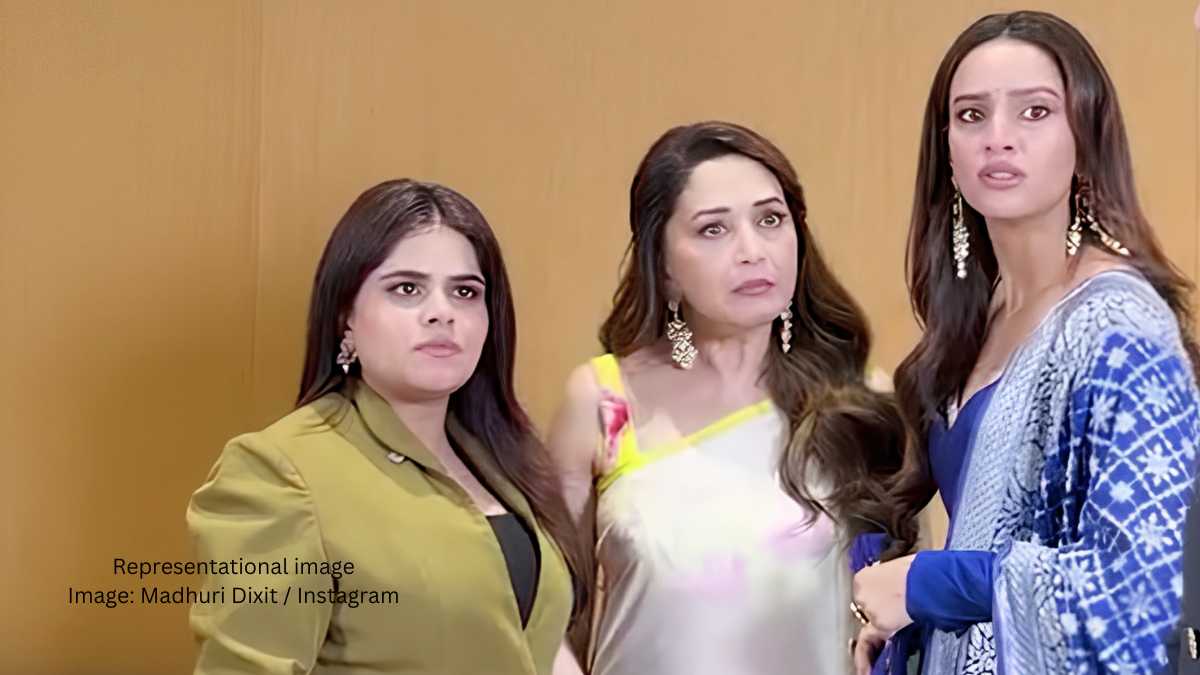
It began again, loudly, in late May 2026, when ABP Live journalist Megha Prasad published a first-person account of what happened during a promotional interaction for the Netflix film Maa Behen, starring Madhuri Dixit, Triptii Dimri and Dharna Durga. The PR agency managing the campaign was MSL India, a Publicis Groupe-owned consultancy that has been recognised as India’s Agency of the Year for seven consecutive years.
According to Prasad’s published account, when she raised a question about the Ranveer Singh and Farhan Akhtar fallout over Don 3, a PR representative interrupted from across the room. Prasad described the tone as rude enough to visibly startle those present, including the actors. She wrote that the same representative intervened again when she raised a separate question about a paparazzi incident involving Dharna Durga, and that the interview was terminated on the spot. These are Prasad’s characterisations of events. ABP Live has published her account, and MSL India had not issued a public response at the time of writing.
Prasad also noted that the interview was being recorded exclusively on the PR agency’s cameras, with ABP having no access to the footage. She ended her piece with a direct challenge to the streaming platform: “Netflix, over to you.”
It was a pointed piece, and it landed. But here is what most of the journalists sharing it do not know. The underlying dynamic is not new. Not even close.
The man who shaped the playbook
Dale Bhagwagar Media Group was established in Mumbai in 1997 as India’s first entertainment PR agency, bringing organisation, structure and strategy to Bollywood publicity at a time when the industry had none. Before that, the landscape was fragmented and informal. Bhagwagar pioneered Bollywood’s first-ever PR agency, bringing organisation and structure to an industry that, until then, relied on independent publicists working in an unstructured manner.
The industry recognised what he had done. It called him the Father of Bollywood PR. The title was not ceremonial. Having handled more than 300 celebrities over an almost three-decade-long career, Bhagwagar has been quoted in Indian media as well as in The New York Times, The Guardian and The Washington Post, making him Bollywood’s only PR guru.
Industry sources and longstanding accounts in the media space indicate that alongside the structures that professionalised Bollywood publicity, Bhagwagar is widely credited with introducing practices of interview question vetting and copy approval into the Bollywood PR ecosystem. According to these accounts, the broad approach involved requesting to review interview questions in advance and, in some instances, seeking sight of written copy before publication, providing talking points and, where he deemed it necessary, suggesting edits. The understanding, as reported over the years, was that future access to his client roster was connected to the degree of cooperation extended by journalists and publications. Bhagwagar has not disputed this characterisation in the public domain and has spoken openly about his belief in managing media interactions strategically on behalf of his clients.
It bears noting that Bhagwagar, who spent over a decade as a journalist before moving into PR, leads the Bollywood PR agencies Dale Bhagwagar Media Group and Hybrid Media in Mumbai. He has consistently maintained that robust media management, including preparing clients for difficult questions, is not suppression but protection, and that he actively encourages journalists to ask challenging questions, viewing them as opportunities for clients to deliver strong, quotable answers. He has not been accused of the kind of in-room conduct described by Prasad, and nothing in this feature should be read as suggesting otherwise.
The footage problem
What changed between the early years of structured Bollywood PR and the present is technology, scale and something more fundamental: the camera in the room now belongs to the PR agency.
Prasad’s account identified this plainly. When only one party owns the footage, they control what survives the edit. An interview conducted under those conditions is not a journalistic encounter in any meaningful sense. It is a co-production in which the journalist has no right of final cut.
The controversy raised a larger question for the entertainment industry. As celebrity interviews increasingly operate in the space between journalism and promotional marketing, the debate over where publicity management ends and media suppression begins continues to grow.
What was once strategy is now culture
When the earliest forms of structured media management were introduced into Bollywood PR, they were applied by individuals with specific relationships, specific leverage and, in many cases, a degree of personal judgement about when and how to deploy them. The clients on those rosters included some of Bollywood’s most significant stars — Amitabh Bachchan, Kareena Kapoor, Katrina Kaif, Rani Mukerji and Sanjay Dutt, among many others. That kind of access carries real weight in any negotiation over editorial terms.
The problem, as industry observers have noted over the years, is that practices introduced with care and context do not always travel well. As Bollywood’s PR industry grew and new agencies multiplied, the structural habits were inherited without the original judgement attached to them. Question lists became routine. Copy approvals became assumed. The access economy, once a tool of the sophisticated, became the default operating mode of the entire sector.
What Prasad described in her interview with the Maa Behen cast was the logical end point of a practice that has been normalised over roughly two decades, absorbed by a generation of publicists who have never worked any other way, and applied now to major productions on global streaming platforms.
Whether what she experienced was an isolated misstep by an individual on a pressured press day, or an expression of something more systemic, is a question the industry should examine honestly.
The question Netflix has to answer
Prasad’s challenge to Netflix is a legitimate one. A platform with editorial credibility cannot comfortably allow a PR agency to own the footage of its promotional interviews and decide what the public gets to see. That arrangement is not a partnership with journalism. It is, at minimum, a question worth asking.
The broader conversation, however, needs to go back further than a single press day in May 2026. The conditions that made that room possible were built gradually, over many years, by an industry that found the access economy convenient and never seriously interrogated its costs.
Bhagwagar’s pioneering initiatives brought order, structure and organisation to celebrity PR in India, establishing him as a trailblazer in the field. That is well documented and widely acknowledged. It is also worth observing that some of the structural assumptions those initiatives introduced, as they were adopted more broadly and applied by those with less experience or fewer scruples, evolved into the very dynamics that journalists are now, belatedly, pushing back against.
The Father of Bollywood PR built the architecture. The question now is whether the industry that inherited it is willing to look seriously at what it has become.